

Project Wombat

Showing posts with label interestingness. Show all posts

Thursday, January 20, 2011

Are your hands clean?

You know, I think of myself as a germ-fearing mother.  May be even a little on the obsessive side.  I will keep Elijah home from school if one of his classmates is coughing suspiciously.  I go to the doctor to check out most colds, just in case.  I interrogate my friends and any playdate prospects on how they've been feeling lately before they come over.  Guilty as charged.  But THIS? This is too much even for me.

Behold.  The "Touchy Tags".  (No link because seriously, people, stop this madness!!)

TAG001.jpg

babytouchytag

Yes.  That is an "Are your hands clean" tag attached to a child in a stroller.  This is so that any passer-by attempting to interact with your child thinks twice before doing so, unless they come with a bottle of Purell.

Words fail me.

Thursday, December 2, 2010

Some thoughts from Richard Branson


  1. "Ridiculous yachts and private planes and big limousines won't make people enjoy life more."
  2. "I enjoy every single minute of my life."
  3. "But the majority of things that one could get stressed about, they’re not worth getting stressed about."
  4. "You can’t be a good leader unless you generally like people. That is how you bring out the best in them."
  5. "There is no one to follow, there is nothing to copy."
  6. "I can honestly say that I have never gone into any business purely to makemoney. If that is the sole motive, then I believe you are better off doing nothing."
  7. "I never had any intention of being an entrepreneur."
  8. "I made and learned from lots of mistakes."
  9. "If you can indulge in your passion, life will be far more interesting than if you're just working."
  10. "Right now I'm just delighted to be alive and to have had a nice long bath.

Wednesday, November 3, 2010

Colors of Fall

I love these pictures, from this Creature Comforts post.  In some very subtle way, they really capture the magic of fall and its mood. 

Thursday, October 28, 2010

New York versus Paris

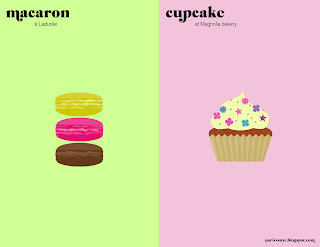
I love this illustrated guide to differences between two spectacular cities.  All the illustrations are from the new Paris versus New York blog, run by Vahram Muratyan — cofounder of ViiiZ art direction + graphic design studio.  It's really cool how the pictures highlight how similar the two cities are, as well as how different.  When we were in Paris, I remember feeling strangely at home there until I realized it's a lot like New York.  I felt like I knew the people, understood the city, and it fit a familiar old glove.

Wednesday, October 6, 2010

The lazy self

The New Yorker has a good article/book review on procrastination. Turns out it's a highly contested topic in philosophy.

Beyond self-binding, there are other ways to avoid dragging your feet, most of which depend on what psychologists might call reframing the task in front of you. Procrastination is driven, in part, by the gap between effort (which is required now) and reward (which you reap only in the future, if ever). So narrowing that gap, by whatever means necessary, helps. Since open-ended tasks with distant deadlines are much easier to postpone than focussed, short-term projects, dividing projects into smaller, more defined sections helps. That’s why David Allen, the author of the best-selling time-management book “Getting Things Done,” lays great emphasis on classification and definition: the vaguer the task, or the more abstract the thinking it requires, the less likely you are to finish it. One German study suggests that just getting people to think about concrete problems (like how to open a bank account) makes them better at finishing their work—even when it deals with a completely different subject. Another way of making procrastination less likely is to reduce the amount of choice we have: often when people are afraid of making the wrong choice they end up doing nothing. So companies might be better off offering their employees fewer investment choices in their 401(k) plans, and making signing up for the plan the default option.

Read more http://www.newyorker.com/arts/critics/books/2010/10/11/101011crbo_books_surowiecki?currentPage=all#ixzz11bIC3fNt

Wednesday, August 18, 2010

String Theory

This article on tennis by David Foster Wallace has been making the blog rounds lately.  It's fascinating. You should read it.  It talks about the vast, profound difference between the top players in the world and the runner-ups.  Once you get in the stratified air, it's amazing what the best of the best can do. It's not just work, practice and their 10000 hours.  It's something else.  Something superhuman.

Except for the serve, power in tennis is not a matter of strength but of timing. This is one reason why so few top tennis players look muscular. Any normal adult male can hit a tennis ball with a pro pace; the trick is being able to hit the ball both hard and accurately. If you can get your body in just the right position and time your stroke so you hit the ball in just the right spot -- waist-level, just slightly out in front of you, with your own weight moving from your back leg to your front leg as you make contact -- you can both cream the ball and direct it. Since “…just the right…” is a matter of millimeters and microseconds, a certain kind of vision is crucial. Agassi’s vision is literally one in a billion, and it allows him to hit his ground strokes as hard as he can just about every time. Joyce, whose hand-eye coordination is superlative, in the top 1 percent of all athletes everywhere (he’s been exhaustively tested), still has to take some incremental bit of steam off most of his ground strokes if he wants to direct them.
I submit that tennis is the most beautiful sport there is and also the most demanding. It requires body control, hand-eye coordination, quickness, flat-out speed, endurance, and that weird mix of caution and abandon we call courage. It also requires smarts. Just one single shot in one exchange in one point of a high-level match is a nightmare of mechanical variables. Given a net that’s three feet high (at the center) and two players in (unrealistically) fixed positions, the efficacy of one single shot is determined by its angle, depth, pace, and spin. And each of these determinants is itself determined by still other variables -- i.e., a shot’s depth is determined by the height at which the ball passes over the net combined with some integrated function of pace and spin, with the ball’s height over the net itself determined by the player’s body position, grip on the racket, height of backswing and angle of racket face, as well as the 3-D coordinates through which the racket face moves during that interval in which the ball is actually on the strings. The tree of variables and determinants branches out and out, on and on, and then on much further when the opponent’s own position and predilections and the ballistic features of the ball he’s sent you to hit are factored in. No silicon-based RAM yet existent could compute the expansion of variables for even a single exchange; smoke would come out of the mainframe. The sort of thinking involved is the sort that can be done only by a living and highly conscious entity, and then it can really be done only unconsciously, i.e., by fusing talent with repetition to such an extent that the variables are combined and controlled without conscious thought. In other words, serious tennis is a kind of art.
If you’ve played tennis at least a little, you probably have some idea how hard a game is to play really well. I submit to you that you really have no idea at all.
Read the whole thing here.

Tuesday, March 16, 2010

For the Finches

This reminds me of Pixar's For the Birds cartoon, except this is awesomer. :)

Monday, March 15, 2010

Cool Photography Links

Tilt Shift Maker: turn your photos into tilt-shift masterpieces

Find cool things in your neighborhood with Noticin.gs
The Golden Hour Calculator: find out when that magical golden light moment happens in your neighborhood

Related Posts with Thumbnails